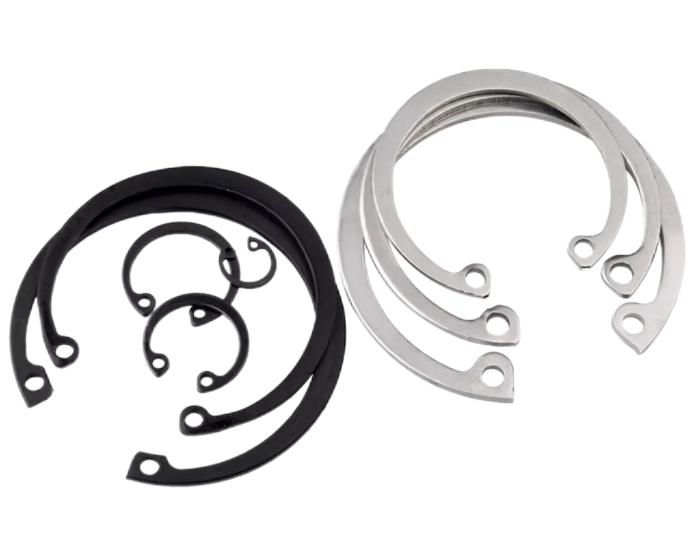
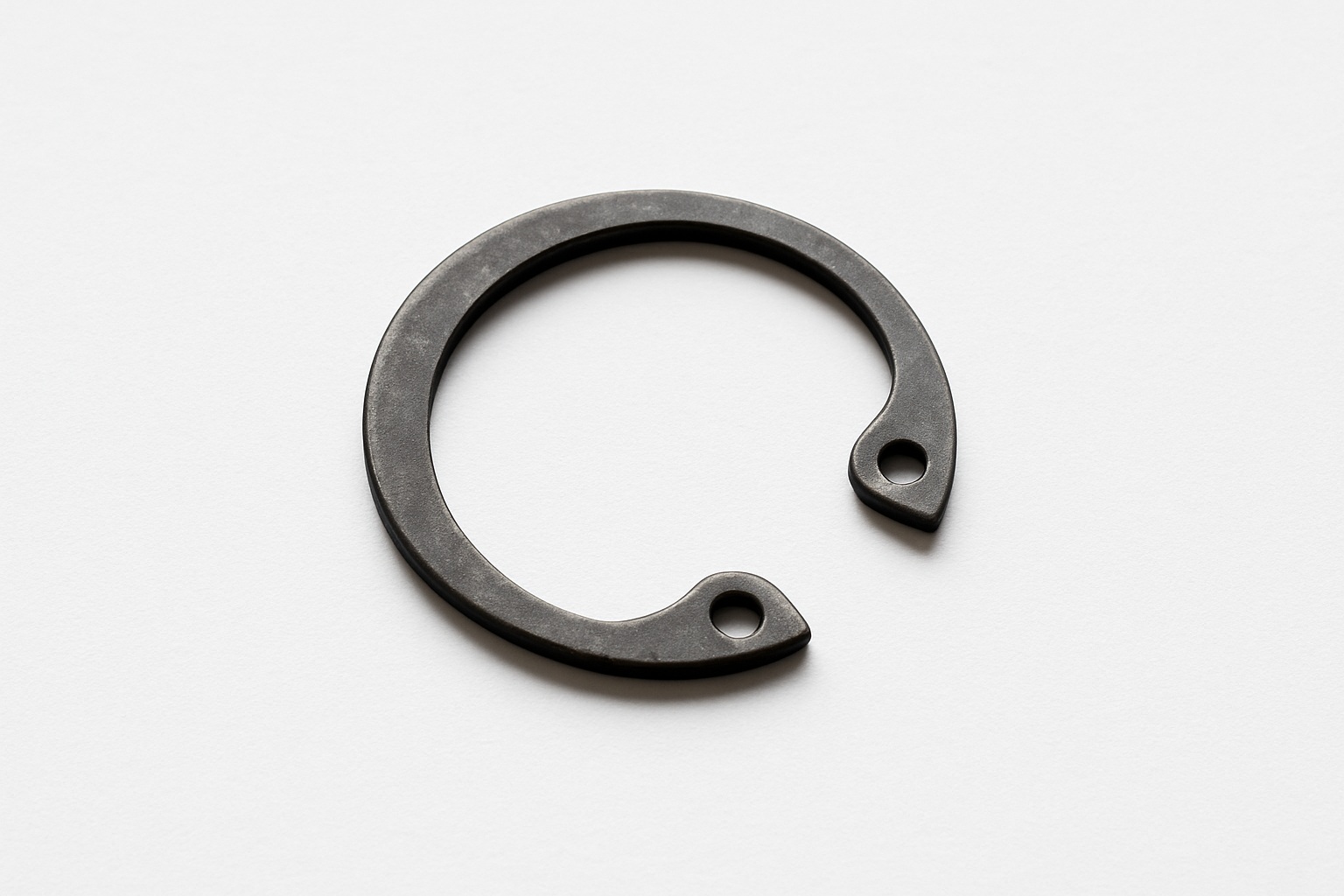
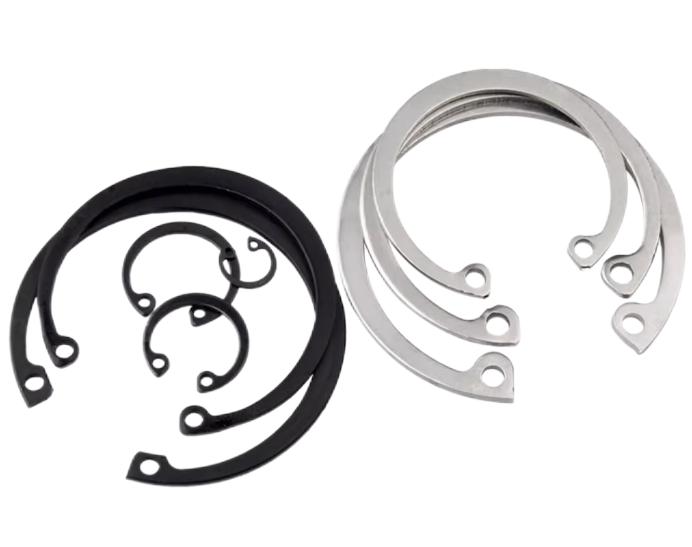
Circlips are small but critical components that secure parts on shafts or inside bores. Measuring them correctly ensures the right fit and reliable performance. Here’s a step-by-step guide on how to measure a circlip accurately.
1. Identify the Circlip Type
Start by determining whether you’re dealing with an internal (bore) circlip or an external (shaft) circlip:
Internal circlip: Fits inside a cylindrical bore to retain a part within.
External circlip: Fits around a shaft to keep components in place on the outside.
This distinction matters — dimensions and tolerances differ for each type.
2. Measure the Shaft or Bore Diameter
Use a vernier caliper or micrometer to measure the diameter of the shaft (for external circlips) or bore (for internal circlips).
Record this as the nominal size of the circlip.
For example, an external circlip for a 25 mm shaft will usually be labeled as “25 mm External Circlip.”
Keeping the Industries in Motion for Production
3. Measure the Groove Width and Depth
Next, measure the groove on which the circlip sits:
Groove width: The distance between the two walls of the groove.
Groove depth: The distance from the surface of the shaft/bore to the bottom of the groove.
These measurements ensure the circlip will seat properly without excessive play or compression.
4. Measure the Circlip Thickness
Measure the circlip’s cross-sectional thickness using calipers. This should correspond closely to the groove width you just measured.
Too thick, and it won’t fit into the groove.
Too thin, and it may shift or pop out under load.
5. Confirm Against Size Charts or Specifications
Finally, compare your measurements against the manufacturer’s standard size chart (e.g., DIN 471 for external or DIN 472 for internal circlips). This verifies that your measured circlip matches the correct nominal size and fits the intended groove dimensions.
Final Tip
Always measure clean, undamaged components and use calibrated tools. If in doubt, consult the manufacturer’s technical data — even a 0.1 mm difference can affect performance and safety.